
Cleanouts
Estate Cleanout Checklist for an Arlington, TX Home
The order that works when you are emptying a parent's Arlington ranch on a probate or listing deadline: secure and search first, value before you dispose, and why the container is the last step.
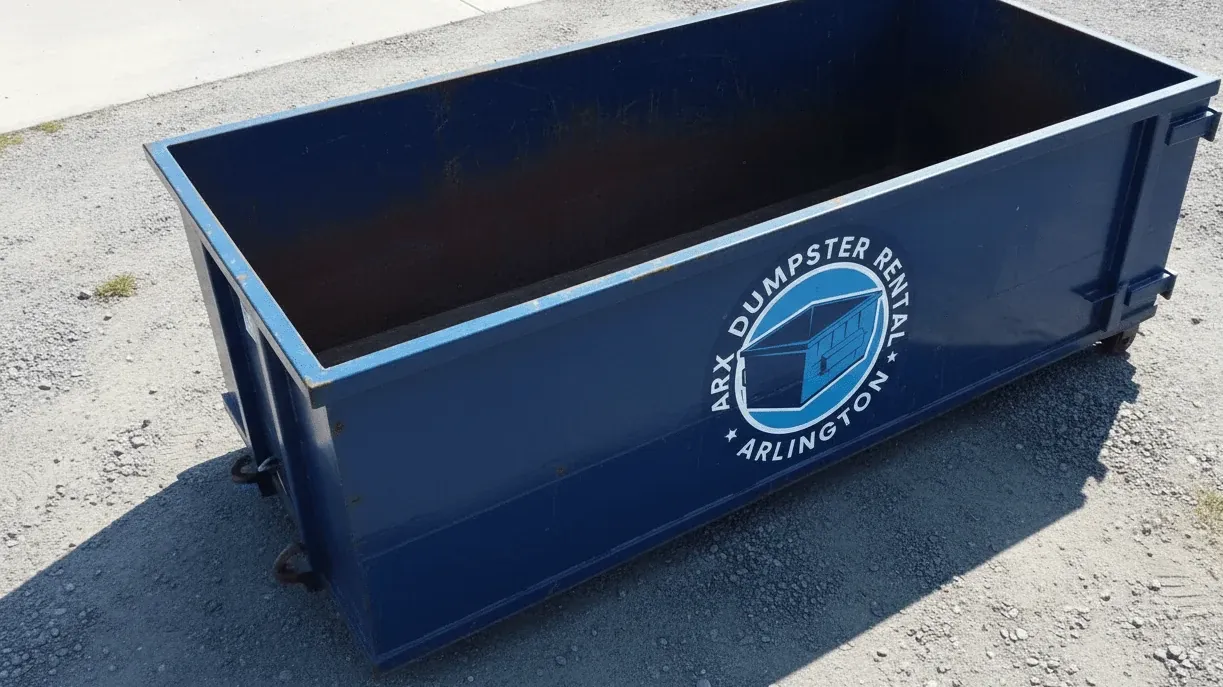
Most estate cleanouts in Arlington start the same way. Somebody has died, or moved into care, and a house lived in for forty years has to be emptied by a date somebody else set — a probate timeline, a closing, a listing date. Often the person holding the keys does not live here.
The hauling is the easy part. What takes time, and what nobody can do for you, is deciding what each thing is: keep, sell, give, throw. So this checklist is built around the sorting, and the container turns up late in it on purpose. Nothing here is legal advice — anything touching title or the estate's obligations goes to the executor or the estate's attorney.
The Arlington house you are most likely clearing
The population curve tells you what is behind the door. Arlington had 7,692 people in 1950, 44,775 in 1960, 89,723 in 1970, 160,123 in 1980 and 261,717 in 1990. The 1970s and 1980s cohort is the largest single block of Arlington housing, and the 1950s and 1960s stock around downtown and UTA is now sixty to seventy years old — the age at which a house leaves the hands of the people who bought it new.
So the typical estate job is a single-storey slab-on-grade brick ranch with an attached garage, an attic, a shed and a fenced back yard. What matters is what is not there. Basements are very rare in North Texas: expansive clay makes a below-grade wall an engineering problem, no frost line forces a deep excavation, and buyers price on dollars per square foot. Everything that would sit on basement shelves elsewhere went up into the attic and out into the garage and shed. The bedrooms look manageable; the volume is overhead and out the back.
The order it has to happen in
- Secure the documents and valuables, before anything moves.
- Let the family take what they want, with a deadline.
- Get someone knowledgeable through before a thing is thrown.
- Donate what is usable, pickups booked in advance.
- Then the container, for what is genuinely left.
The common mistake is ordering the box on day one, because it feels like progress. What it really does is put a clock on decisions nobody is ready to make, and once a box is on the truck it is gone.
Documents and valuables first
Pick one room, put one box in it, and let nothing leave it: deeds, vehicle titles, insurance policies, tax records, safe deposit keys, and bank statements, which are how you find the storage unit nobody mentioned. Military records, particularly the DD-214, govern burial benefits and survivor claims, and photographs, negatives and home video are the thing families most regret losing. Run a shred pile as its own category, because a container open on a driveway is not a secure document store. Hold the mail and leave the power and water on — you will want lights in the attic, and the water bill proves residency later in the week.
Selections, then valuation
Set the rule in advance and set an end date, because open-ended selection stalls an estate for months, and write down what leaves and who took it. Then get an appraiser or estate-sale company through before the first load goes out; an hour walking a three-bedroom is usually the highest-return hour of the week. Estates of this era hold categories families bag up unlooked at: 1950s to 1970s furniture, tools (a tradesman's garage is often the most valuable room in the house), jewellery and coins, firearms and vehicles.
Room by room
The attic is the single biggest surprise, and the reason is structural: with no basement, the attic became the archive. It is also brutally hot. DFW sees 20.2 days a year at or above 100°F, and an attic under a dark composition roof runs far above outside air, so from June through September attic work happens first thing in the morning. Take water and a headlamp, have someone in the house who knows you are up there, and mind the joists.
The garage is the other reservoir — paint and stain going back decades, automotive fluids, pesticide, pool chemicals, the second fridge, tools, and coffee cans of hardware. Sort the chemicals into their own corner as you go.
- Closets and the hall — fast work, and where a lockbox or a folder of papers hides.
- The kitchen — slow, because it is dense and almost all decisions.
- The bedrooms — check under every bed and nightstand first, because that is where medication, cash, jewellery and firearms turn up.
- The shed and side yard — mower, hoses, pots, leftover brick, fuel cans.
- The fence line and back patio — cedar panels, dead patio furniture, limb wood by the gate. Bulky and light, and what pushes a job from a 20 to a 30.
The piles that need their own route
| Category | Where it goes |
|---|---|
| Deeds, titles, policies, tax records, military papers | The document box. Nothing leaves it. |
| Paint, solvents, fluids, pesticides, pool chemicals | Fort Worth Environmental Collection Center. |
| Firearms, medication, sharps | Never a container item. |
| The second fridge or freezer | Refrigerant recovered by a technician first. |
| Asbestos-containing material | Licensed abatement. Not in any container of ours. |
Paint, chemicals and automotive fluids
Arlington has no permanent hazardous waste facility, so a reciprocal agreement sends residents to Fort Worth. The Environmental Collection Center, 6400 Bridge Street, opens Thursday and Friday 11am to 7pm and Saturday 9am to 3pm on 817-392-1234. It is free to Arlington residents with no voucher, once a month per household, with a driver's licence or a water bill. It takes automotive fluids, cleaning and pool chemicals, light bulbs, paint, pesticides and chemical batteries.
Two limits catch estates out. Commercial waste cannot be accepted, so a contractor clearing the property cannot run the paint over for the family. And an Arlington postal address may sit in Pantego or Dalworthington Gardens, separate towns with their own rules. Ring 817-392-1234 first about anything unusual, propane cylinders included.
On paint, PaintCare does not operate in Texas, so ignore the guides sending you to a hardware store. What Texans do is dry out latex paint and put it in the regular trash — lid off, hardener stirred in, left until solid — and take oil-based paint, stain and solvent to Bridge Street.
Firearms, medication and the second fridge
Firearms and ammunition do not go in a container. Have someone competent make them safe, keep them secured and separate, and take them to the police department or a licensed dealer. Transfer out of an estate is a question for the executor or the estate's attorney.
Medication comes out of every cabinet, nightstand, drawer and glove box and goes to a pharmacy or police take-back — not the container, not the drain. Diabetic needles are common here, and Arlington publishes residential sharps guidance. The second fridge or freezer needs its refrigerant recovered by a certified technician under 40 CFR Part 82 first; once evacuated and tagged, the shell is ordinary metal.
Mattresses and electronics
Mattresses are ordinary waste in Texas — the Mattress Recycling Council programme runs in California, Connecticut, Oregon and Rhode Island only. Texas has no landfill ban on electronics either; what it has is manufacturer take-back, Texas Recycles Computers and Texas Recycles TVs, covering personal and home-business equipment only, and the Arlington Landfill accepts e-waste too. Our guide to what can go in a dumpster in Tarrant County covers the rest.
If the job turns into a gut or a teardown
Pre-1980 buildings routinely carry asbestos — floor tile and black mastic, pipe and duct wrap, textured ceilings, roofing felt — and pre-1978 homes carry lead paint under the EPA RRP rule, most of the housing here. We cannot take asbestos-containing material in any container, ever.
The Texas detail most guides get wrong: demolition notification goes to the Department of State Health Services, not TCEQ. Notice is due at least ten working days ahead and is required before demolition even when no asbestos is present — a clean survey changes what the notification says, not whether you file it. The relief for families is real: 25 TAC §296.1(c) exempts a single private residence, so a family gutting one Arlington ranch is outside the regime, while a five-plex or a multi-house teardown is not. The DSHS asbestos programme confirms which side of the line a job falls on.
The 50-year demolition trap
If the house is coming down rather than being emptied, put this on the calendar first. Arlington's Landmark Preservation Commission reviews demolition of any structure fifty years or older, and on the curve above everything built through roughly 1976 now trips it.
It meets on the second Thursday of the month, and applications must be in at least nine business days before it. The LPC cannot deny a demolition permit; what it can do is extend the Historic Stay by 45 additional days. Stack that against ten working days of DSHS notification and a pre-1976 teardown can take a couple of months to reach the point where a machine turns up. On a probate or listing deadline, find that out in week one, not week six.
Where the free routes run out
Arlington residents get three free drop-offs a year at the Arlington Landfill, 800 Mosier Valley Road in Euless — one facility, city-owned and operated under lease despite the Euless address, open Monday to Saturday 7:00am to 4:30pm on 817-354-2305.
Read the eligibility carefully, because estates fail it. The free visits are for Arlington Water Utilities account holders, homeowners only, non-transferrable, with a Texas licence or ID at the scale house. So if the water account has been closed, or the executor lives elsewhere, or a contractor is doing the clearing, there are no free visits. Ring the scale house for current rates.
The kerb does not close the gap either. Arlington collects about 2 cubic yards of bulky items a week and about 2 cubic yards of brush a week. Two cubic yards is a washer and a dryer, so a whole-house estate clear is many weeks of that allowance, and the estate does not have many weeks. Construction debris and roofing shingles are not collected at the kerb at any volume.
Sizing, and when to book it
- A 20 yard handles a typical single-storey Arlington ranch with the attic and garage emptied.
- A 30 yard suits a whole-property clear — house, garage, attic, shed, patio furniture and a fence line together.
- Where the family is sorting across weekends, take swap-outs rather than one oversized box.
Our size comparison has the dimensions. The scheduling rule: book the container for when the sorting is done, not for the day you arrive. Call while you are still on selections, say which day you expect to load, and we will hold it. If the lifting is the problem rather than the box, junk removal is where we do the carrying, and the estate cleanout page covers a closing date.
Setting a box on an Arlington drive
Protection boards go under every container. On these houses the drive is often already cracked from clay movement — the soil shrinks away through July and August and heaves back with the autumn rain — so we photograph it on arrival. Look up before picking the spot: a mature post oak, live oak, cedar elm or pecan is the usual obstruction on these lots.
In an association neighbourhood the CC&Rs govern where a container may sit and how long it may stay, and no Texas statute protects you against an HOA here, so read the declaration first. For street placement, our Arlington permit guide covers the right-of-way, and the City of Arlington is where to confirm collection rules. You need not be there for delivery — mark the spot with cardboard, text a photo, and the driver sets it there.
The home cleanout checklist for Arlington is the general version of this job, and the residential dumpster rental page covers a box at a house going on the market.
ARX Dumpster Rental has hauled out of 1200 N Commercial Blvd in south Arlington since 2012. If you are working to a deadline you did not choose, tell us the date and we will work backwards from it. Call Andre at (817) 404-4864 or use the contact page. Fort Worth's Environmental Collection Center takes the chemicals; we take the rest.
Questions this guide did not answer? Call (817) 404-4864. We would rather spend two minutes on the phone than have you order the wrong container.